Ian's story: Courage, determination and finding light


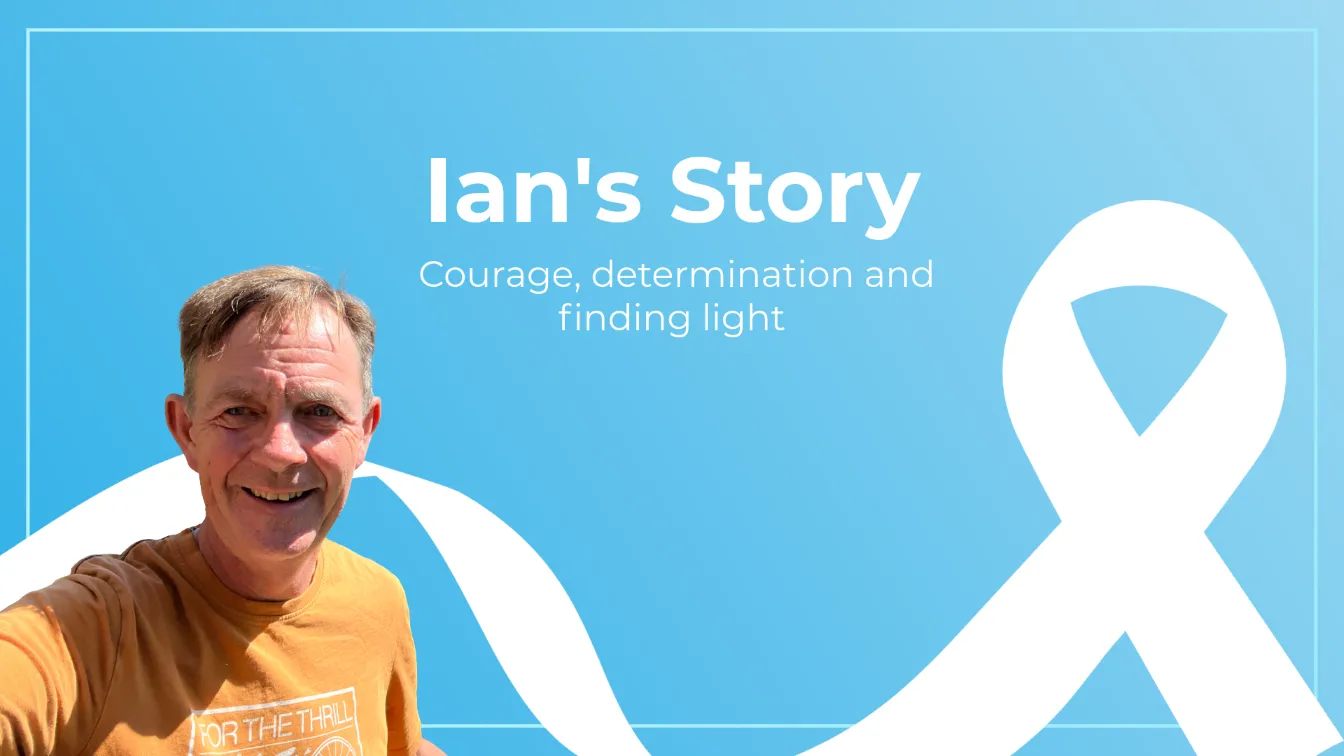

Can you tell us a bit about your journey with lung cancer?
I went to my GP in December 2019 as I had a strange sensation in my throat. I’m extremely grateful that she referred me for an endoscopy, which showed nothing, and a chest X-ray. The chest X-ray showed a lump in my lung, and my entry into the world of cancer had begun.
Throughout January 2020 I had the barrage of scans and tests cancer patients will be familiar with. This culminated in a devastating consultation where I was told that I had lung cancer. More scans followed, and on Valentine's Day I was told I had Stage 4 lung cancer which had spread to my brain, scapula, adrenal gland, lymph nodes and possibly my spine. The oncologist said that chemotherapy was the planned treatment, but I was told this was considered palliative and my life expectancy was likely less than a year.
Further tests followed. I had radiotherapy to my brain tumours in early March, and I was just about to start chemotherapy when I was called and told I had ALK-positive (anaplastic lymphoma kinase positive) cancer. Chemotherapy was cancelled, and instead I would start on targeted therapy (treatments that work by targeting specific changes in cancer cells, helping to stop the cancer from growing while reducing harm to healthy cells). Much searching on the internet ensued, and all of a sudden there was a shard of light in the gloom.
I started taking a targeted therapy drug and 6 years later am still on it. I had radiotherapy to my primary cancer when it started to grow in 2023. Apart from some necrosis (the death of cells in an organ or tissue due to disease, injury, or failure of the blood supply), my scans have been good so far. Side effects come and go, and 'scanxiety' happens every 3-4 months, but I do my utmost to enjoy the life I didn’t think I’d have in early 2020.
What are some challenges you have faced along your journey, and how have you stayed positive or dealt with them?
Unfortunately, targeted therapy can come with a range of side effects. I try to work around these as much as I can, rather than let them define what I do. If I have muscle aches or feel tired, I have learnt to push myself into some exercise. For me, walking outside for a couple of hours or 30 minutes of yoga helps me physically and mentally.
The emotional challenge of having cancer has been extremely difficult. One of the hardest parts for me has been never knowing what is happening inside me and thinking “I’m only okay until my next scan”. I have been very open about my cancer with family, friends and occasionally people I’ve just met! Initial reactions vary, but the support I’ve had from people close to me, as well as friends I see occasionally, has helped me massively to feel like I’m not on my own with cancer.
Giving up work, which I did gradually through 2020 and 2021, was a difficult decision. I enjoyed what I did, but, at that time, I was finding it emotionally and physically challenging. I worked hard to process the loss of this element of my life at an earlier point than I ever expected to. I did this by focusing on what the change had allowed me to do, rather than what it took away.
What do you wish more people understood about living with ALK-positive lung cancer or cancer in general?
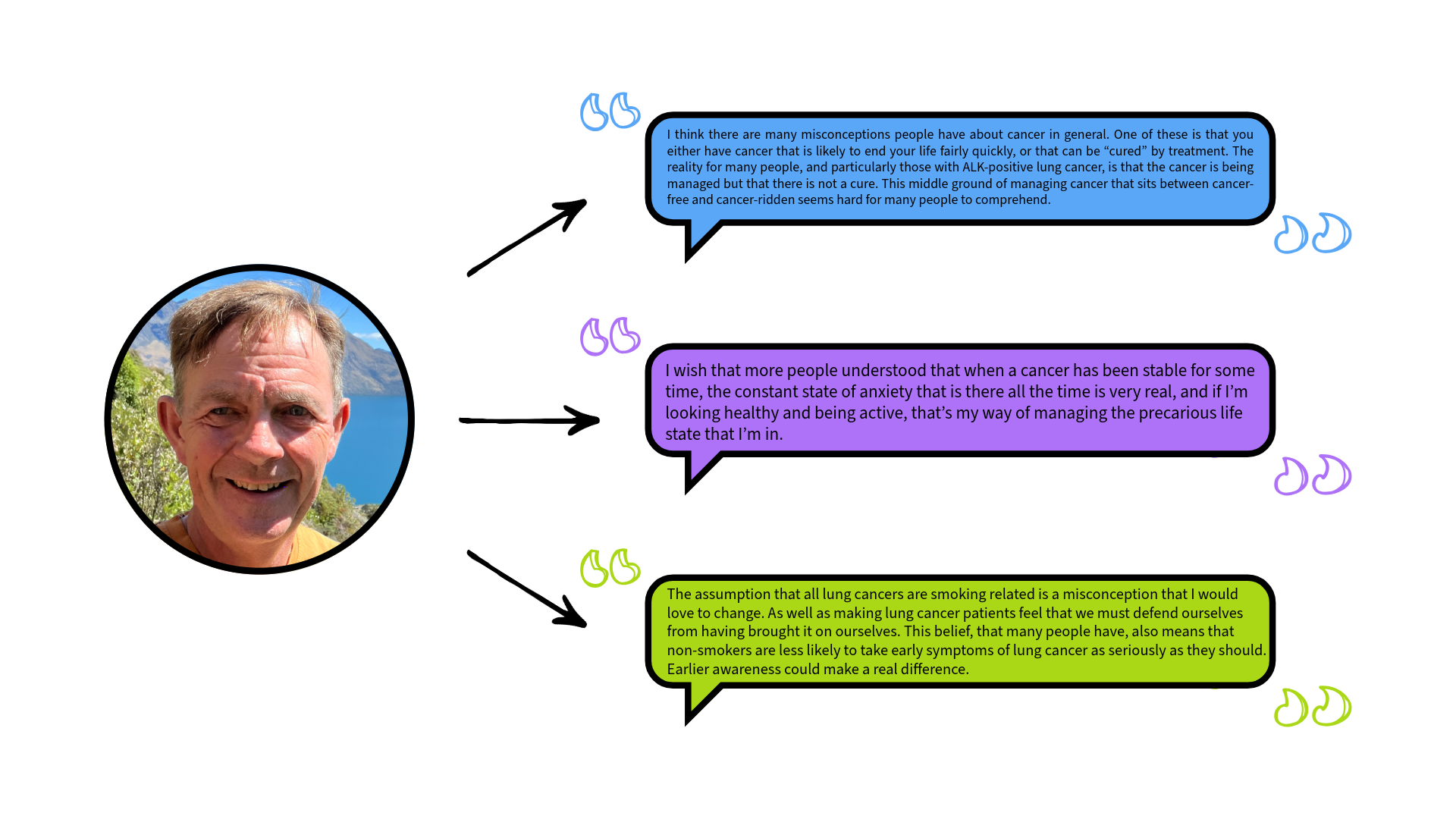
What message would you like to share with others who have been newly diagnosed or are living with the condition?
For many people, the period of diagnosis and starting treatment is the hardest part of living with ALK-positive cancer. The shock, feelings of loss and being afraid are very overpowering. It is so hard to see any future beyond palliative treatment and life being brought to an early close. However, for many people, targeted therapy works very well and for long enough for life to be enjoyed. For some people, side effects tend to reduce over time. Even with side effects that don’t, many people find ways to live their life well, see children grow up, and welcome grandchildren into the world.
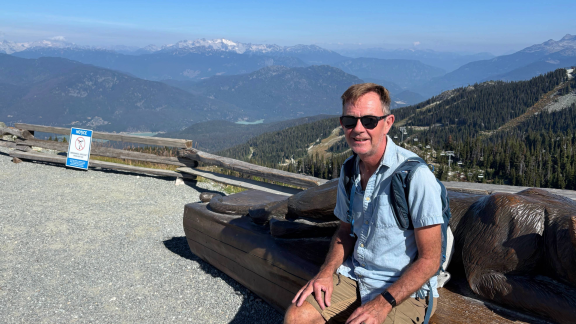
"There are not many things people with ALK-positive lung cancer can't do."
Whether it is travel, running marathons, or excelling in other aspects of life, someone with ALK-positive lung cancer will probably have shown that this is possible. If you need support, help, or inspiration, there is a great community of other “ALKies” out there.
The stories shared on this website are personal experiences, written in the patients’ own words. They reflect individual journeys and should not be considered medical advice or representative of all patient experiences.
Any images featured have been shared by the individuals themselves and are used with their explicit permission.