

Making decisions with your healthcare team
Shared decision-making ensures that people living with cancer (or another illness) fully understand the options available to them and have the opportunity to actively take part in decisions surrounding their treatment and care.1,2 Shared decision-making is important to ensure any decisions that are made are right for you, based on how you are feeling and what you want.2
A shared decision-making conversation brings together:2
- The doctor, nurse or other healthcare professional’s expert knowledge on treatment options, including their benefits and risks
- Your preference, personal circumstance, wants and needs
Many of the doctors, nurses and other members of your healthcare team will be aware of the importance of shared decision-making. They will include you in conversations, rather than making a decision on your behalf. But for some healthcare professionals, shared decision-making might be an afterthought. If this is the case, don’t be afraid to speak up. Be sure to ask about anything you’re not sure of and do voice your opinion. These are your decisions too!
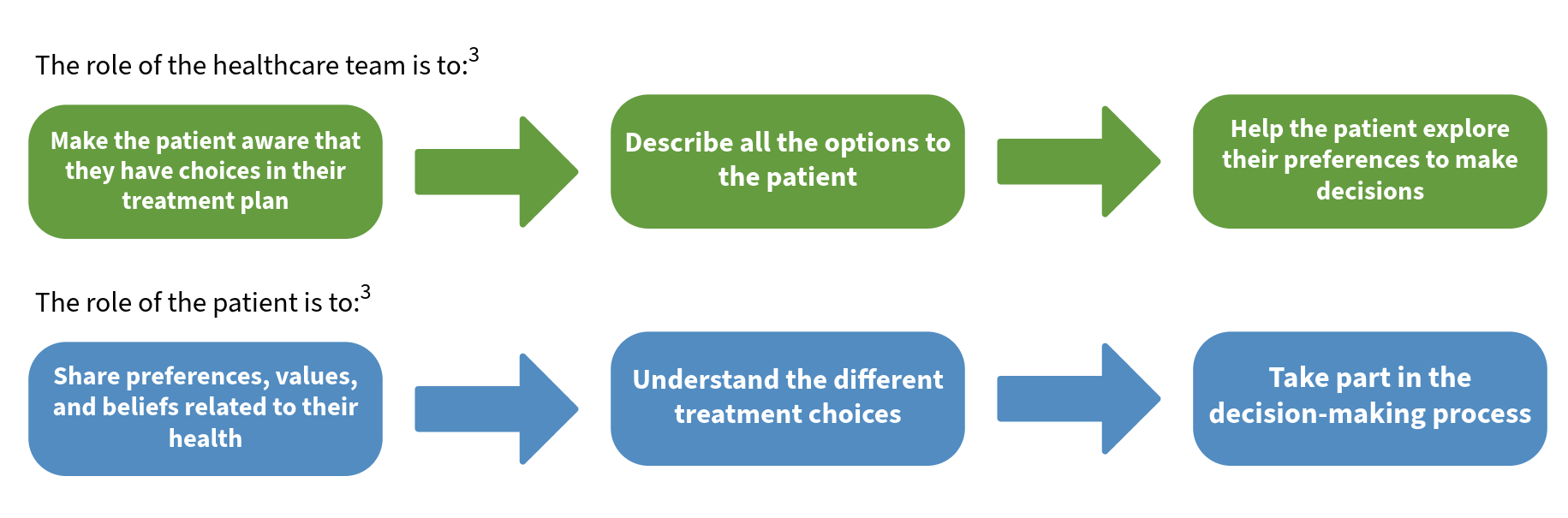
Roles of the healthcare team and individual in shared decision-making3
What to consider when making decisions with your healthcare team3
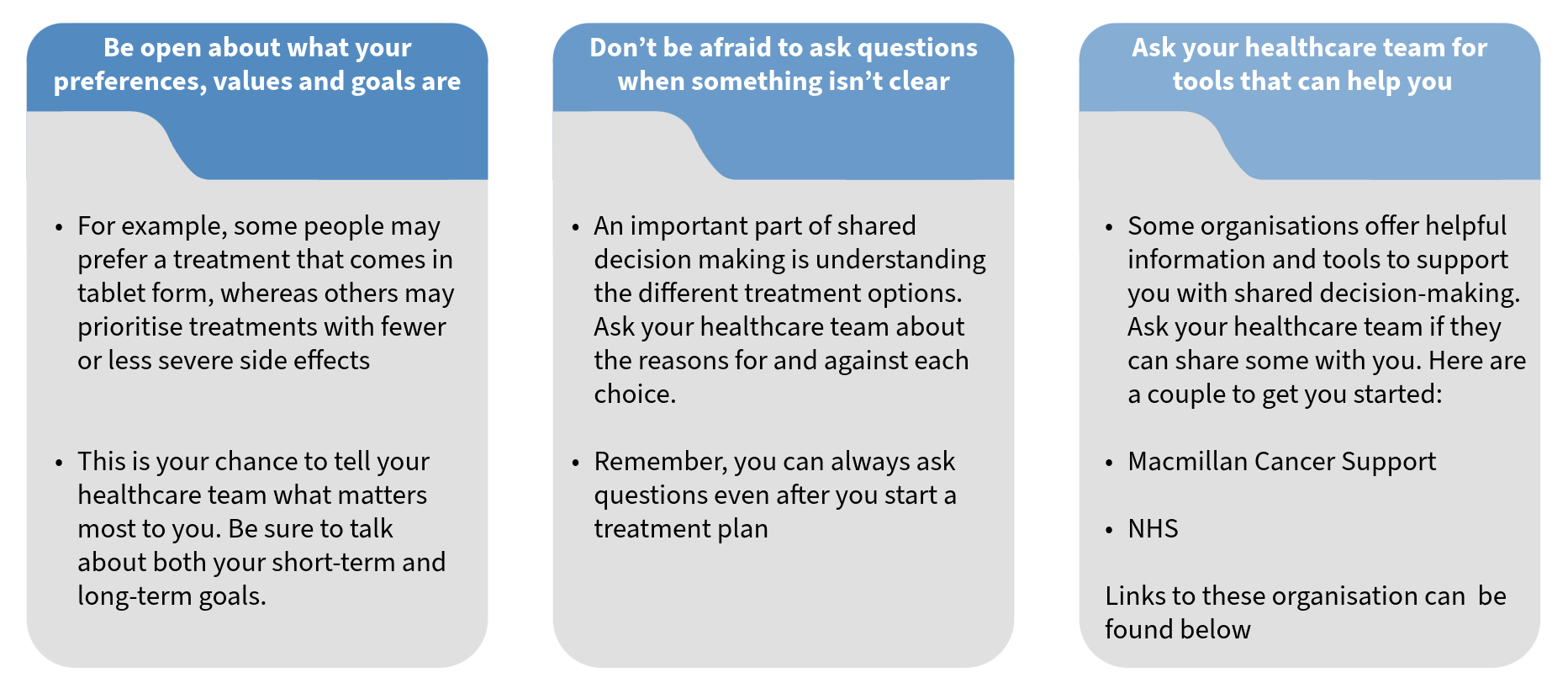
Visit Macmillan cancer support here and the NHS website on shared decision making here
Many of the doctors, nurses and other members of your healthcare team will be aware of the importance of shared decision-making. They will include you in conversations, rather than making a decision on your behalf. But for some healthcare professionals, shared decision-making might be an afterthought. If this is the case, don’t be afraid to speak up. Be sure to ask about anything you’re not sure of and do voice your opinion. These are your decisions too!
If you would like to find out more about shared decision-making, you can read the article below on making treatment decisions together. In this article you will find a video of a conversation between a patient and a hospital cancer specialist which aims to help you understand more about shared-decision making through a real-world conversation.

Shared decision-making ensures that people fully understand the options available to them and have the opportunity to actively take part in decisions surrounding their treatment and care
References
- National Institutes for Health and Care Excellence. Shared decision making. Available from: https://www.nice.org.uk/about/what-we-do/our-programmes/nice-guidance/nice-guidelines/shared-decision-making [Accessed March 2026].
- NHS England. About Shared Decision-Making. Available from: https://www.england.nhs.uk/personalisedcare/shared-decision-making/about/ [Accessed March 2026].
- Elwyn G, et al. J Gen Intern Med. 2012; 27: 1361–7. Available from: https://pmc.ncbi.nlm.nih.gov/articles/PMC3445676/ [Accessed March 2026].