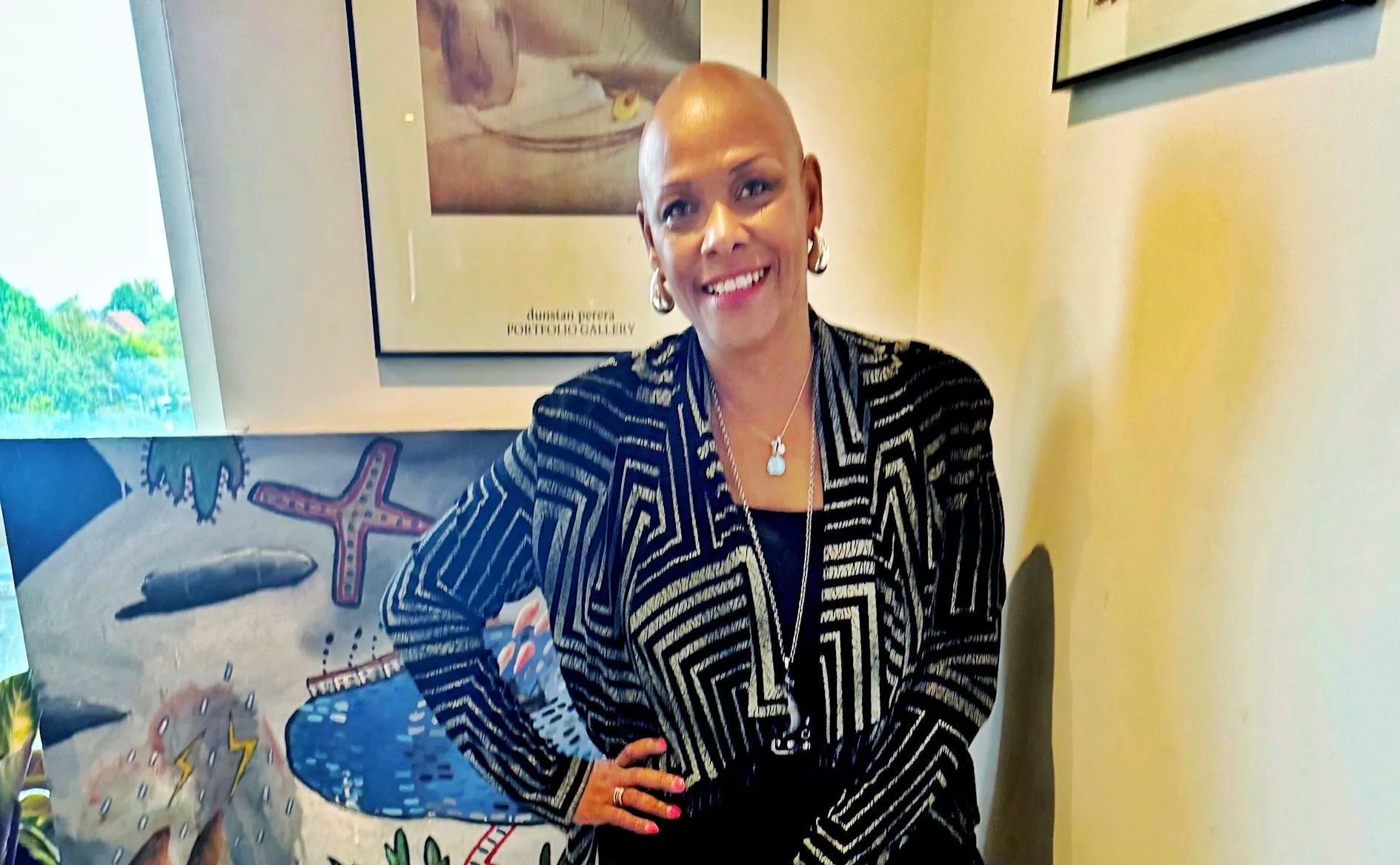

My symptoms first started in 2014; my three children were young adults. I juggled a corporate job while running my catering business and restaurant. I attended the gym three times a week and played squash and tennis.
Everything changed almost overnight. I went from being active to unable to climb a flight of stairs without getting short of breath. Sometimes I couldn’t walk and talk simultaneously.
For a year, my GP told me I was suffering from anxiety and stress. Even after spending five days in hospital with palpitations and breathlessness, all tests returned inconclusive. Months later, after another hospital admission for shingles, which I later learned is often linked to myeloma, a GP friend urged me to use the NHS ‘Choose and Book’ system to get a second opinion outside my area. I didn’t take it seriously at first and waited months before finally requesting a referral. Within two weeks, a cardiologist sounded the alarm. He listened to my fitness story and quickly arranged tests; weeks later, an MRI revealed cardiac amyloidosis, a rare and life-threatening disease.
I was referred to UCL’s Amyloidosis Centre to determine the cause, was it hereditary or cancer-related? The cancer possibility devastated me. After being admitted to hospital, I began chemotherapy. Despite warnings that I would likely be bedridden following treatment, I stayed active and fought through it, walking around my hospital room daily. However, in December 2015, my cardiologist delivered heart breaking news: my heart was failing, she gave me just six months to live. I left the hospital with a heart failure diagnosis and an implanted defibrillator to spend my last Christmas with family. I refused to accept that prognosis. I asked everyone to pray for me. After nine months of chemotherapy, in August 2016, the myeloma went into remission, though my heart was damaged.
"My biggest regret is not paying attention to my body sooner or seeking a second opinion earlier. However, I find comfort in the fact that, while amyloidosis is severe and irreversible, it helped in the earlier detection of multiple myeloma. This reminds me that things could be worse and helps me keep a positive mindset."
During lockdown, I found a lump in my breast. It was an aggressive cancer. I had a lumpectomy, but before chemotherapy and radiotherapy finished, the myeloma relapsed. In August 2021, I began another nine-month chemotherapy course for the relapsed myeloma. My consultant offered maintenance drugs; I declined and chose instead to focus on lifestyle changes and holistic health.
At first, I felt heartbroken, losing the active life I loved. However, instead of letting that stop me, I used those feelings as a driving force. After losing my corporate job and unable to run my business, I poured my energy into volunteering. I was fortunate to receive counselling, which helped me accept and understand my cancer diagnosis. I dedicated myself to supporting various organisations, charity funding, and sharing my story through writing my book, 'Why Me? My Fight for Life from Heartbreak to Hope'. Now I tell my story on several platforms. I also founded 'Heartbreak to Hope CIC' which uses personal experience to bring awareness, encouragement, and guidance to those facing serious illness. My trust in God helped me move my attention from my challenges. Focusing my efforts on something meaningful strengthened my spirit and gave me the courage to keep going. I’m thankful for my family, who stood by me and unwaveringly fought alongside me.
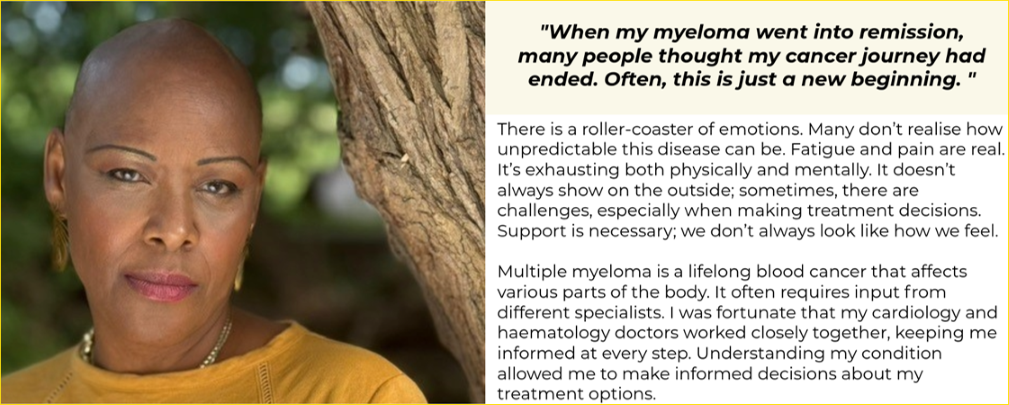
Even in remission, my life has ups and downs. Every two months I get blood tests, and waiting for results can be scary. Hearing “cancer” is hard, and multiple myeloma is a long journey. However, I’m hopeful because research and treatments continue to improve.
Expressing my feelings and seeking support made a significant difference in my life. I’ve learned to listen to my body and rest when needed. My bones are not as strong as they once were, even if I don't always feel it, so I am careful. Family counselling is crucial, as my marriage suffered and ultimately ended in divorce.
"Multiple myeloma presents differently in everyone. No two people have the same experience, so what I read online didn’t always apply to me. Sharing my experience with other patients was informative and encouraging."