Introducing the Blood Cancer Charter: A Guide for People Living with Blood Cancer



Blood cancer is the fifth most common cancer in the UK, with more than 40,000 people receiving a diagnosis each year. Currently around 280,000 people in the UK are living with a type of blood cancer.*1
There are more than 100 types of blood cancer, including leukaemias, lymphomas and myeloma, as well as some less common types. Yet awareness and understanding of blood cancer is much lower compared to other types of cancer.1
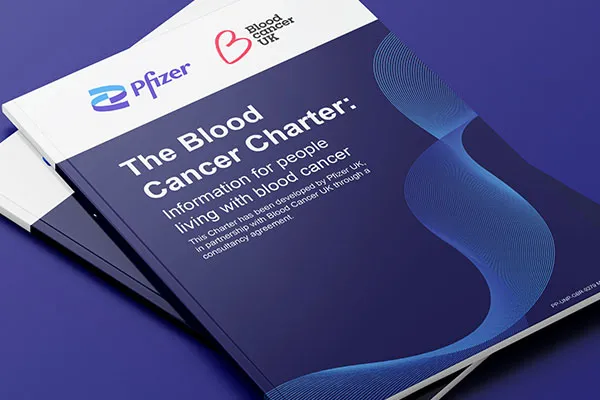
We’ve teamed up with Blood Cancer UK and people living with blood cancer to create a helpful guide to support people on their journey with blood cancer – from diagnosis through to treatment and aftercare. Through the Blood Cancer Charter you can better understand what types of care and support are available along the way.
Living with blood cancer can be challenging, but you don't have to face it alone. Yet, 47% of people with a blood cancer diagnosis do not feel part of any community, whether that be their sub-type condition (e.g. leukaemia), the blood cancer community or even a broader cancer community. Despite this, 70% say this is important to them.2
Furthermore, at the point of diagnosis, 58% of patients are unaware of any potential support that may be available to them.3
Everyone affected by blood cancer deserves to feel connected, informed, and supported. Whether it’s through peer networks, patient organisations, or tailored resources, support should be visible, accessible, and inclusive—so no one is left to navigate their diagnosis alone
If you or someone you know is living with blood cancer, click on the link below to download the Blood Cancer Charter. We hope that you find this guide useful and feel prepared to face blood cancer head on.
Download the Blood Cancer Charter here
*As of February 2025.
References:
1. Blood Cancer UK. Facts and information about blood cancer. Available at: Blood cancer facts | Blood Cancer UK [Accessed November 2025].
2. Blood Cancer UK. Because people are missing out on being a part of a supportive community. Available at: Because people are missing out on being a part of a supportive community | Blood Cancer UK [Accessed November 2025]
3. Blood cancer UK. Because people are less likely to access support and services. Available at: Because people are less likely to access support and services | Blood Cancer UK [Accessed November 2025]