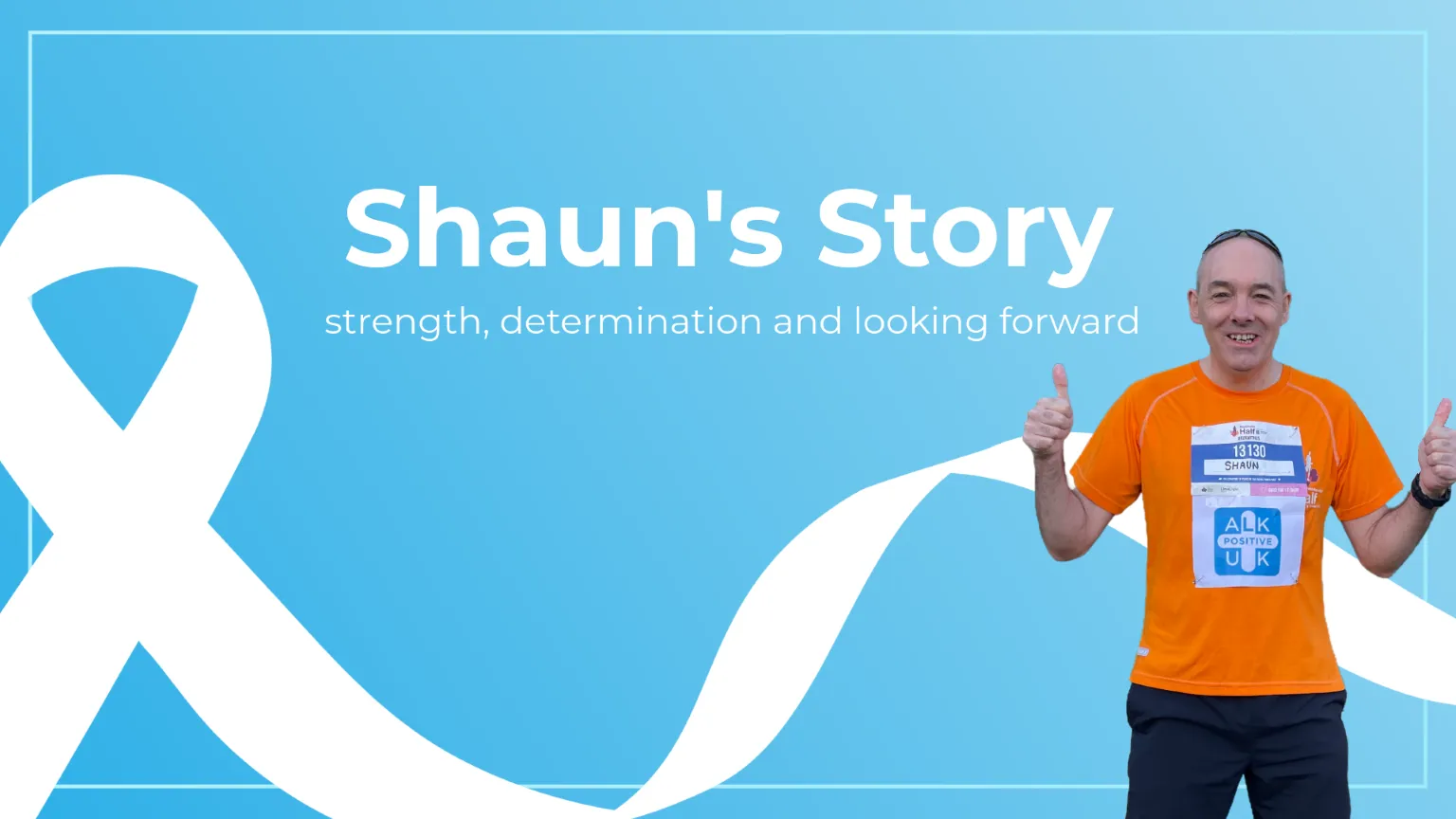
Shaun's story: strength, determination and looking forward



Can you tell us a bit about your journey with lung cancer?
My diagnosis with ALK-positive (anaplastic lymphoma kinase positive) lung cancer was puzzling to me. I was a fit, never‑smoking 51‑year‑old who had never had anything seriously wrong.
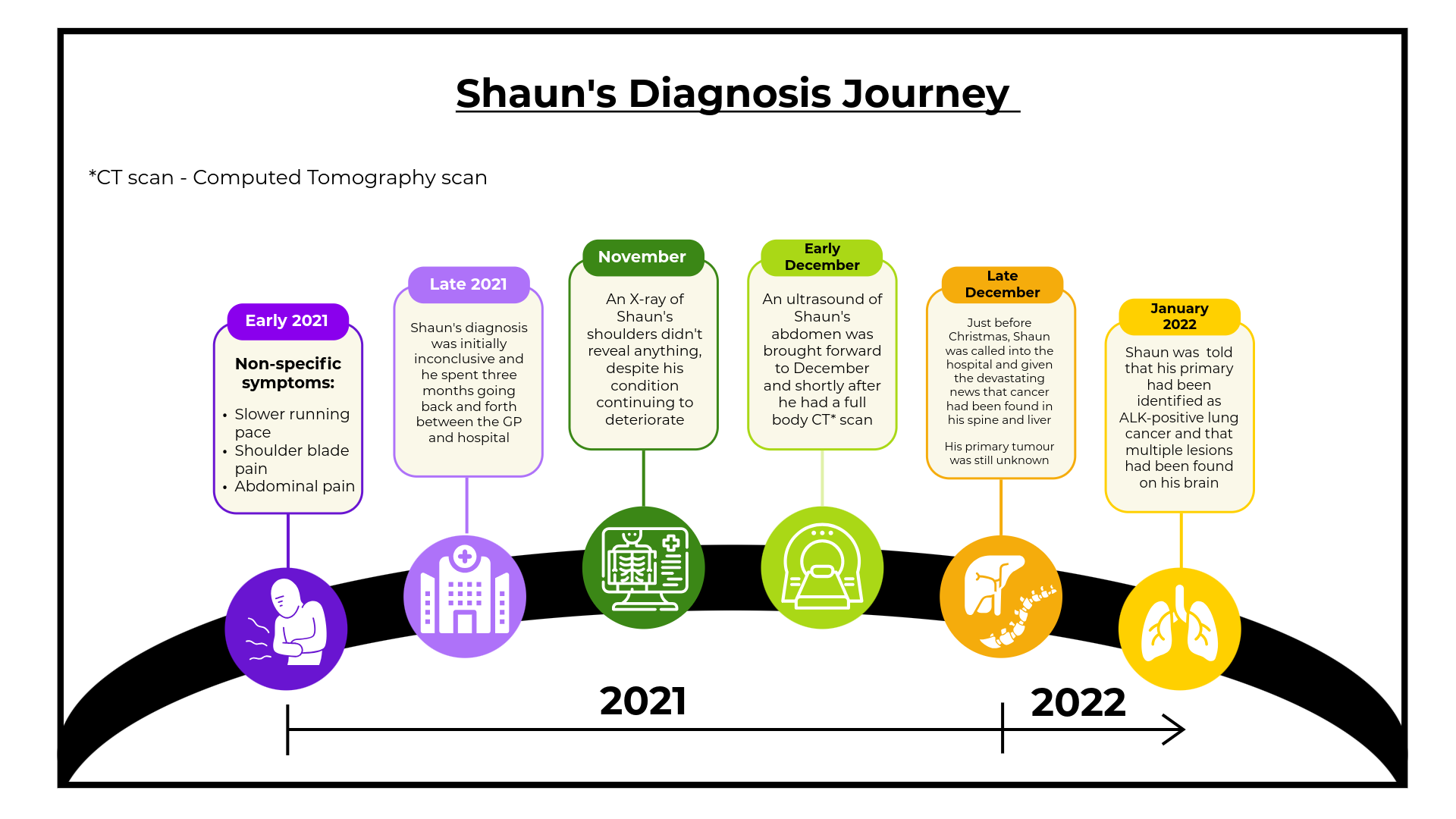
Initially, I was given five sessions of radiotherapy as there was concern about a lesion pressing into my spinal cord that had the potential to paralyse me. I had never heard of ALK‑positive lung cancer and was not aware that targeted therapy (treatments that work by targeting specific changes in cancer cells) existed to help control some cancers.
Within a week of starting treatment, I noticed an improvement in my condition, although I knew that this wasn't a cure. A couple of months later, I got back to running again and was even able to run a half marathon in September 2022. Surprisingly, it wasn’t even my slowest half‑marathon time. More than four years later, I remain on the same treatment.
What are some challenges you have faced along your journey, and how have you dealt with them?
Although I currently live a very normal life on treatment, the obvious challenge is that none of these drugs are cures for stage IV lung cancer – they are life‑extending, but not curative treatments.
All of us lung cancer patients diagnosed at an advanced stage will be very familiar with the schedule of scans. Most of us will have surveillance CT scans of the chest, abdomen and sometimes pelvis every three or four months.
Lung cancer frequently spreads to the brain (as was found in my case), and consequently many of us will also have regular MRI scans of the head. For me, and many others, these scans (particularly head MRIs) often take several weeks to be read and communicated. One of the challenges to navigate is not getting too caught up in what the next scan might bring.
"Personally, I keep busy with other things and try to put it out of my mind. I remember how I felt in 2021, the year before my diagnosis and take the view that things can’t be too bad as long as I feel better than I did then."
The targeted therapy drugs do have side effects, but luckily they have been mild for me.
What do you wish more people understood about living with ALK‑positive lung cancer or cancer in general?
ALK‑positive lung cancer is overwhelmingly diagnosed at a stage where there are no curative options available, such as stage IV or late stage III disease. As with many other oncogene (a gene that has changed in a way that causes cells to grow out of control, which can lead to cancer) driven lung cancers, people diagnosed tend to be younger than the typical lung cancer patient. On average, diagnosis of ALK-positive lung cancer occurs around the age of 50, although some people are tragically diagnosed much younger.
Most of us have little or no smoking history; there is no obvious cause and before symptoms appear we are often healthy for our age.
When we start treatment, many of us return to an altered normality.
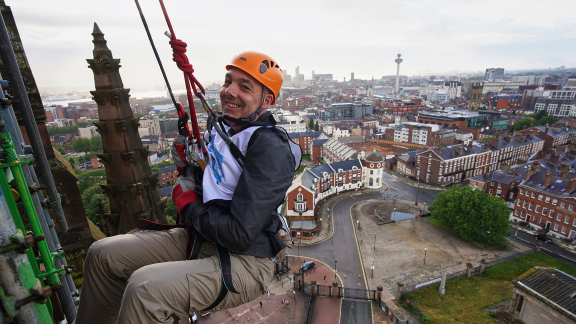
"Outwardly, we can appear 'cured', but we are not."
We live with the uncertainty that, whether it is months, years, or in rare cases much longer, there will be progression. We all hope there will be another effective treatment when that happens. I’m sure this burden of uncertainty is familiar to anyone living with advanced cancer.
What message would you like to share with others who have been newly diagnosed or are living with the condition?
I was diagnosed at a very advanced stage and was feeling increasingly unwell. Looking back, it is possible that without treatment, my situation could have deteriorated very quickly. At the time, I assumed chemotherapy would be the only treatment option, as I had never heard of targeted therapy drugs.
For someone newly diagnosed today, I would say that while this is undeniably a devastating diagnosis, we are fortunate to be living in an era where treatments can significantly extend life, often with a good quality of life. Further medical advances, including new types of treatments, are in development and may extend life further.
We still have a way to go before ALK‑positive lung cancer can be considered a chronic condition or cured, but progress continues to be made, and every year brings us a little closer.
The stories shared on this website are personal experiences, written in the patients’ own words. They reflect individual journeys and should not be considered medical advice or representative of all patient experiences.
Any images featured have been shared by the individuals themselves and are used with their explicit permission.