
To watch Jon's story: ' redefining the role of a 'carer' ', where he gives his personal experience of what being a carer means to him, click here
So cast your mind back. Can you remember what it was like when you were first diagnosed?
I'd had a phone call from the nurse in the morning to say, we'd like to see you today. You'd all said to me, 'No, don't worry. It's not going to be cancer.' And when I got there, it was. It was. I'd never heard of multiple myeloma before.
People imagine you get a cancer diagnosis and you're going to basically cut it out, hit it with a load of chemicals, hope for the best. You can't with that, can you? There's nothing to cut out from myeloma, so it's frustrating. It is quite cruel that there's no specific, you know, cure for it. There's lots of things going on in your head.
And really, you know, you think that you're going to die fairly quickly. Those initial conversations are like, pretty intense, aren't they? Yeah, they were, yeah. I think having some background understanding in healthcare helped at the start, and it certainly drove me to want to understand more about the condition. And then we moved into that, sort of, early treatment phase, dealing with everything that came along with that.
It was very scary. Everybody's journey with myeloma is so different, it depends on what sort of myeloma you have. You can have really good days, but there's quite a lot of dark days when you're feeling really down and lethargic. Can't get off the sofa. Fatigue is nothing like being tired. It's a whole other level. A whole other level. Your body just feels...I can't explain it, it's drained is a good way of putting it isn't it? Loss of taste.
And you struggled quite a bit with infections for a while as well, though touch wood at the moment, it's okay. But you had a real bad run, didn't you, where we were going at two in the morning. Two in the morning to A&E!
Yes, a lot of infections. You did all my shopping for me didn't you? Yeah. And I get lots of feedback about all the things I got wrong. Well, yeah, you always squashed the bread. The bread was always in the bottom of the bag.
You lost your hair as well, didn't you, and you had a wig at one point. Because I had two transplants, I was without hair for a long time. And then when it came through, it came through like a curly perm. You should pay good money for that. People do; it was a good Kevin Keegan look.
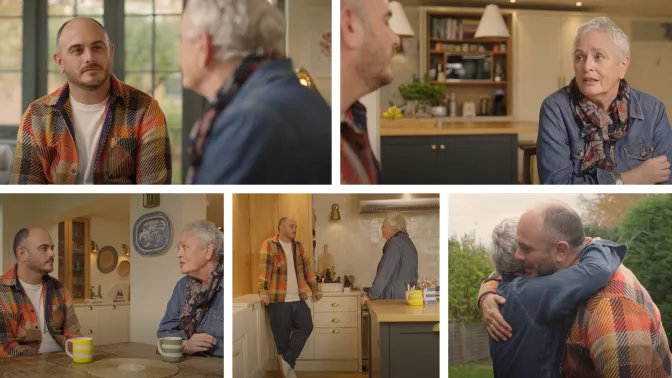
I'm not sure that we have, like, a particularly traditional carer relationship, obviously, being your son. Not all carers are live-in carers. You don't need support like 24/7. I choose my moments to be useful, and you don't need me hovering around getting in your way all the time. But there are times when you'll hear from me a bit more, and other times when you're happy just cracking on, on your own.
I think we're more of just a team, really. We are a team. Trying to attack the myeloma together. Yeah, I think the thing that helped me the most was trying to be useful, trying to make a difference and just be as supportive and helpful as I can. And my roles changed during the time. You know, from that initial, kind of, working almost like a little - your own personal researcher, looking into it and trying to understand it as best we could, to being, kind of, head of logistics.
Yeah. And a delivery man. Yeah. And an emergency driver to the hospital. But you've always been there and you always drop everything and come to my help.
We got a lot of benefit from various different websites, didn't we? Myeloma UK in particular, ByYourSide, Macmillan. Don't Google it because that is the worst thing to do. You can find yourself in a pretty dark place pretty quickly and also open yourself up to a lot of misinformation too. So yeah, try and stick to reputable sources. And also speak to your team.
Each patient has a team that's designated to them as well as their consultants. And don't be afraid to ask, you know, ask as many questions as you want. I've done a course with Myeloma Patients Europe, which has been really excellent. I've got to meet some other carers through that as well, which has been great. And then you've got a lot of, sort of, community benefit as well.
I've got a lot of help on social media from other people that have multiple myeloma and made friends through that. Obviously, you're what, five years plus into your journey now, but what would you say to someone that's newly diagnosed or to just people in general that you wish everybody kind of knew about myeloma?
Life changes a bit because you have to do things in a different way. You have to think, is this going to tire me out? Can I manage to do this? I would just say, listen to your body and if you're really, really tired, don't push yourself because that is the worst thing to do. Just take one day at a time and try and live to the full.
You plan around it, right? That's the thing. You're proactive about it. And don't just let it happen to you. You're doing something about it. Yeah, because life's for living. All of us. Every day you've got to live to your best.