Jon’s story: Redefining the role of ‘carer’


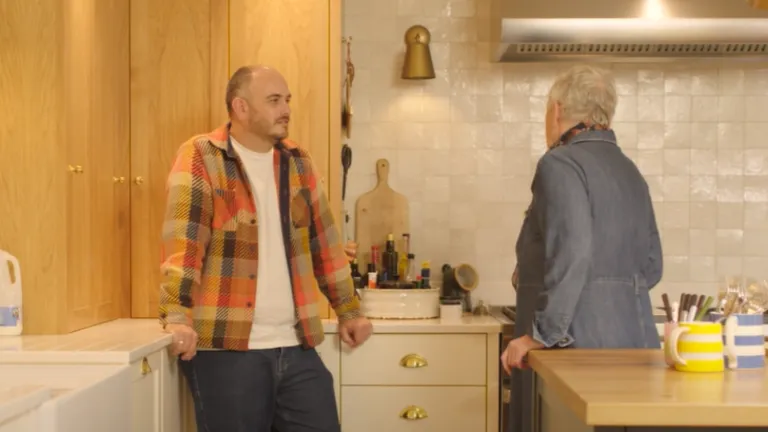

To view 'A family story: Facing multiple myeloma together' where Jon and his mother Alyson discuss their experiences with multiple myeloma click here
I'm Jon. I'm a carer for my mum. She's been diagnosed with myeloma now for about five years. My mum's still really fiercely independent, looks after herself as well as she ever has. I don't really love the term "carer" to be honest, and I push back against it a little bit. I think I support in lots of different small ways.
It's not like I'm there all the time, 24/7. We don't live together. I think my job is to kind of fill in the gaps around the edge where, you know, if she's really tired and she can't do something or I need to go to a place that's really crowded on her behalf because she can't go. And that has changed over time.
Like, there've been moments where she's been really, really unwell. And I've been, I have to be more involved, like getting her shopping for her, delivering stuff, picking up prescriptions. And I've had to take her in the middle of the night to the hospital. So, anything you can do around the edges of that to try and help people to live well while they're on treatment is really where energy needs to be focused.
And it's important to just do stuff for yourself as well, like you would with any other, you know, stress in your life, like taking good care of yourself and your own mental health is really important.
As a big part of me, kind of making peace with the diagnosis was to really understand what's likely to be in the road ahead and so invest in the time to, like, not be continually surprised by what happens is, is huge. I work in healthcare comms and have done for a little while, and so it helped me a little bit because obviously I have a basic understanding of how cancer works.
What I had to learn was what myeloma is. And yeah, I had to kind of quickly onboard myself into understanding that world and try and find ways to get good information to be as helpful as possible. Myeloma is such a personal journey, no two people are going to be alike. And so actually just understanding the fundamentals from a trusted source and then investing a lot into the relationship that you and the patient have with your consultant or your GP.
Try and focus on, you know, realistic, achievable things that you can do. And I think yeah, just try and have a basic grounding of what's happened so far and what's likely to happen next is absolutely the best place you can start. Myeloma is one of those conditions where you're going to go through phases where you might be actively receiving treatment, and then you might have a little treatment holiday or a break.
And so, the prep that goes into getting ready to receive a new treatment for the first time actually can be a real game changer. Like, the more well that the patient can be when they get that treatment, the better the likelihood that it's going to work for them. And that can be in their emotional state, getting them into a positive mindset.
It can be in terms of their general wellbeing. But it also comes down to things like hydration, nutrition, just making sure they've got a really balanced diet. Are they getting enough protein, are they getting enough fibre? Little things like that that can support the success of the treatment when they come round to start receiving it again.
And we'll never know whether any of the stuff that we did actually made a difference, but I'm going to choose to believe that it did, because she's done really well on this one.
With us at the moment, we're really lucky to be in a really good remission. But you know, we're aware that ultimately our journey will end at some point, as it does for everybody. And I want to make sure there's nothing left on the table. You know, we tried everything we could do. Everything that needed to be said was said, and there's nothing kind of left at the end of that so...that's how I've approached every day.