Katie's story: Hope, Resilience and the role of the Blood Cancer Patient Charter in supporting patient needs


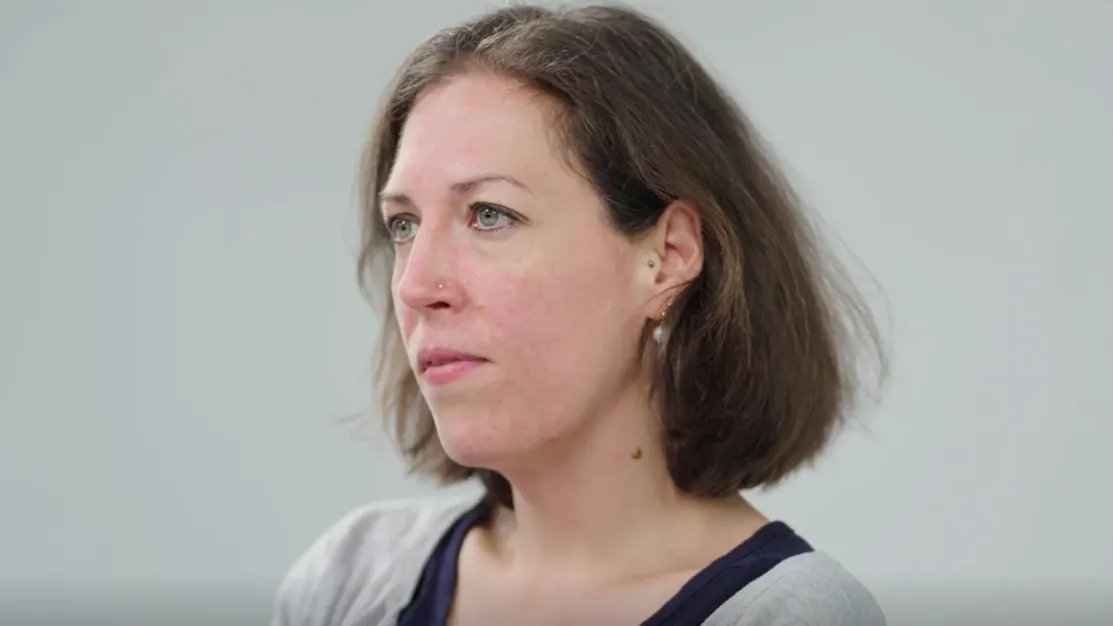

My name's Katie, I'm 40, I'm a middle child, I'm a chocoholic. I live with chronic myeloid leukaemia.
So my diagnosis I think, is slightly unusual, though quite a lot of blood cancer diagnosis don't necessarily seem to be run-of-the-mill.
So I was 22. I had lost quite a lot of weight, which I was very happy about, and it was after the Christmas holidays and I was just really tired all the time and my hair was falling out and I nearly fainted twice in a week and I don't faint.
So my flatmate said you've got to go to the doctor. So I think the, the fainting happened fairly early or near fainting happened early in the week and it was Friday morning and I still hadn't been to the GP. So she came and woke me up with a cup of tea and said get up.
It's a feeling. I said, you know, I'm not, I'll, I don't feel ill, but I don't feel right either. And to be fair to her, she said I don't know, let's do a blood test results in a week. I was like great.
That night the phone rang. We had a landline in the flat and it was about 7:30 and it was a woman. And she said, am I speaking to Catherine? I said yeah. She said, you know, confirmed date of birth or whatever to make sure it was me. And she said, how are you feeling? I said not not right, but not wrong, tired, blah, blah, blah, blah, blah. She said you need to come to the hospital now. And I said, OK, fine. You need to tell me why. She said, oh, I'll phone you back. Landline rang again. Once again, it's how are you feeling? So I explained and they said you need to come in. I said yeah, and you need to tell me why. And he, the guy said, well, no one's done this before. And I said, well, you know, and, and I'm quite unique. And he said I'll ring you back. So phoned back and said, how's your science? I said bad. I scraped through GCSE science. I'm reading History of art. You know, science is not of, of strong point.
And he said, I could come and pick you up, by the way. I was like, no, no, no, I'll come in. And he said, OK, do you know what too many cells means?
And I had to think. And God knows how this came into my head because in 2007 it was still the big C Like, yeah, I had to think. And I said cancer.
Yeah. It's just, it's a lot. There is so much that I wish 22 year old me knew. And it it, it's, you know, fertility stuff. It's so much. And I talk about it and, you know, even though I'm getting upset, it's fine. It's part of my process.
I talk about a parallel universe that was taken away from me, the life I should have had versus the life that I have or had. Because it's also partly why, much to my mother's annoyance, I have three tattoos. And one is hope. Because without hope there is nothing. And that is super important. And 22 year old me knew that maybe not quite to the to the extent that I do now.
I've got an Angel wing because I am looked after and I've got an elephant. Sorry. It's fine just to keep me strong.
I think the patient charter will be really important for people living with blood cancer. Blood cancer is quite unique in many ways in terms of how you were diagnosed, your treatment pathways. It's quite complex and it's not spoken about in the same way that other sort of the more solid tumours are spoken about.
To have something that is sort of written down to unify things for patients I think is really, really important. It's so important that anything to do with any form of patient care has patients involved because not to say that consultants and clinicians and researchers and people in government aren't brilliant. If they've not had a blood cancer diagnosis, they don't know what it's like. They might understand at a biochemical level how the medication hopefully works to treat, manage, maintain, cure, etcetera. Until you've had that diagnosis, until you have taken those treatments, you cannot imagine how it is. So to to do something like this with patients is so important.