Helen's story: The importance of communication and why she thinks the Blood Cancer Patient Charter is so powerful


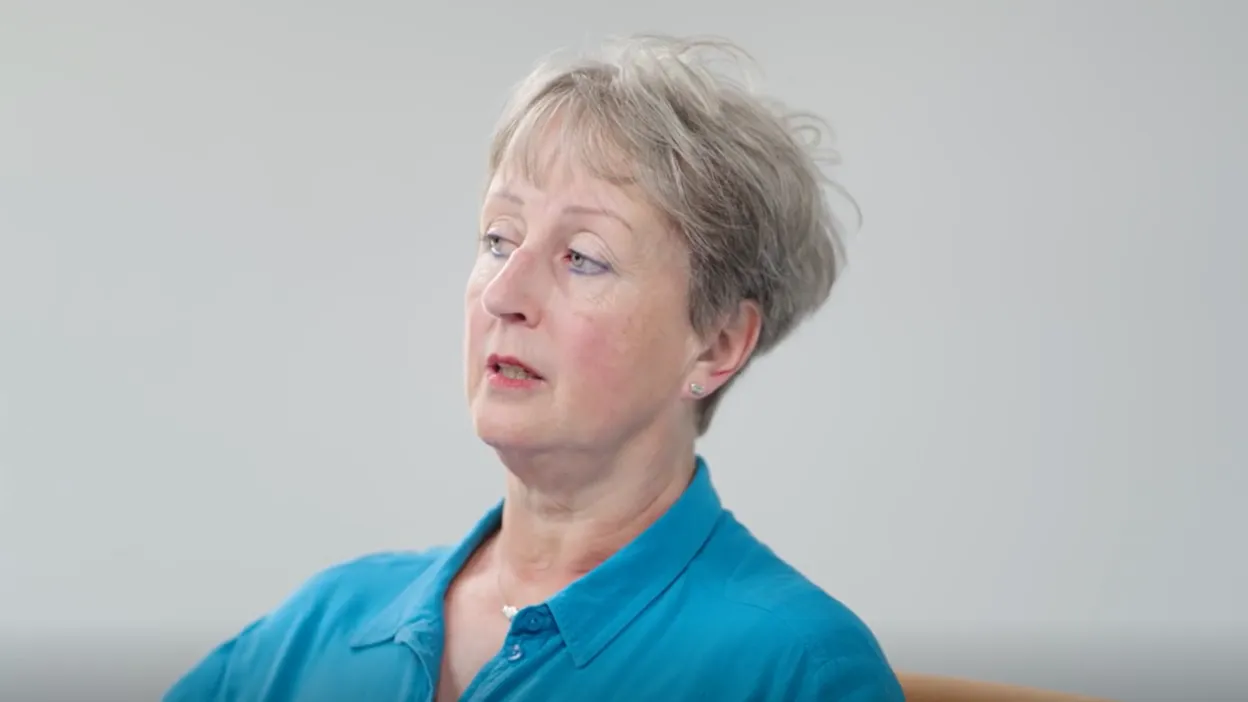

My name is Doctor Helen Miller. I retired from general practise 5-6 years ago because of my diagnosis of leukaemia and the extreme fatigue. I was on a diving holiday in Egypt and I became really poorly, which is unusual because I've done a lot of travelling and my I usually have a cast iron gut.
And I went to the medical centre where I saw a locum cardiologist who was doing a holiday job and he was the first one who taking the bloods noticed that I was anaemic and my platelets were low. And he did mention leukaemia but I must say I was in denial.
He made got me fit to travel home to England with support and advised me to see my GP ASAP when I got home. So I saw my GP on the Monday and had bloods and the GP rang me on the Tuesday and said your bloods are very wonky was the term.
I went home and I hadn't told my parents, I hadn't told anybody what was happening. I told my place of work that I was had a tummy bug and it was being investigated and then Friday morning I was on the computer sorting out holiday insurance claim for the medical care whilst I was away and other things and she rang to say could I come down later that day because she had some preliminary results.
I had an inkling that something was more serious because she had taken a bone marrow on the Thursday. But when I walked into the room with Simon and I saw the specialist nurse sat there and then I saw the booklet on the table, acute myeloid leukaemia, which she had tried to cover up with my notes, but I saw it.
My initial feeling was my heart sank and why now? My life is just sorting itself out professionally with the surgery and the practise. It's not fair.
And that's when she told me it was an acute, it was a severely dysplastic, which means it's a very bad, nasty acute myeloid leukaemia. But our aim for treatment is curative. And those words have stuck with me until now.
You know, seven years on and I think one of the messages I tried to relay back to to the doctors and nurses is words are important. What you say to patients is important and they will remember, remember your words.
she said don't Google it because the prognosis, the outcome is very poor. We've got it early. You're well. And so you'll be very fit for chemotherapy. She said it's very aggressive chemotherapy. You'll end up in intensive care at least once. And at that stage the, the, the specialist nurse then said, look, we'll go into the next room and I'll answer any questions.
And we did go in with the nurse into the into the side room. But I must say I was a bit overwhelmed and a bit I had to get my head around it.
We drove home and my parents at that stage, they, they lived very nearby and I said well mum has sussed that there's something wrong. I told her that I had a tummy upset but I don't think she believed me. We'd better go around and tell them.
So we went round to their house. It was really hard. It's just my dad has died since then so it's hard.
I was very ill and I was in hospital for probably nearly six months. Majority of that in isolation with odd days at home. Whereas some of the chronic forms are in and out with, you know, medication follow-ups, blood tests, reviews.
But again, having that piece of paper, that booklet, my interpretation of the intention of the document and that's why I became involved in it, was very much about empowering patients to know from information from previous patients experience about what they should expect from their care. And it's just an information book that people can dip in and out of during their their journey. I hate that word really journey like, but there isn't a better one. And I think because we've done it in in collaboration and using experience for patients that I think is very powerful. The patient charter is also very powerful, again maybe not immediately, to signpost patients to other organisations, reputable organisations, charities that may be able to help them.