Voices of Life




The Impact of mBC on Quality of Life
Watch the video below to hear patient advocates discuss the impact of mBC on quality of life.
There are many aspects of quality of life. It can be treatment and treatment side effects. But it can also be my social life. What about my work? Fatigue is a big problem with many treatments. And sexuality belongs to it.
It means that I want to continue my life as it was before, which is of course not possible, but I want to come close to it.
It differs a lot from patient to patient. You first have to ask and find out what bothers them, what side effects they have, and how you can support them to have a better life. I think communication is key in this setting.
It would be helpful to have really structured questions to get the most of communication and understanding out of a short time. And I wish there was someone in each HCP (healthcare professional) team that could spend additional time with a patient.
For HCPs (Healthcare professionals), I think it would be nice if they start this conversation with a patient asking, did anything change in your relationship, partnership, or do you have any problems? Because I think most patients won't dare to do that and just talking about it probably already helps. Especially the sensitive issues.
The more open you are to understand and to really recognize this is something that is important to this patient and has a major impact on quality of life. Take it seriously.
And that makes the patient feel much better and understood with their problems.
Quality of life is deeply personal, and for women with metastatic breast cancer, it's not just about how your body feels.
Voices of Life, a Pfizer-led initiative, wants to bring attention to all aspects of wellbeing, looking at intimacy, rest, physical activity, social connection, mental health and nutrition to help metastatic breast cancer patients find ways to improve their day to day lives.
Understanding the Effect of mBC on Quality of Life
Quality of life is defined by the World Health Organisation as the way someone sees their position in life in the context of the culture and value systems in which they live, and in relation to their goals, expectations, standards and concerns.1
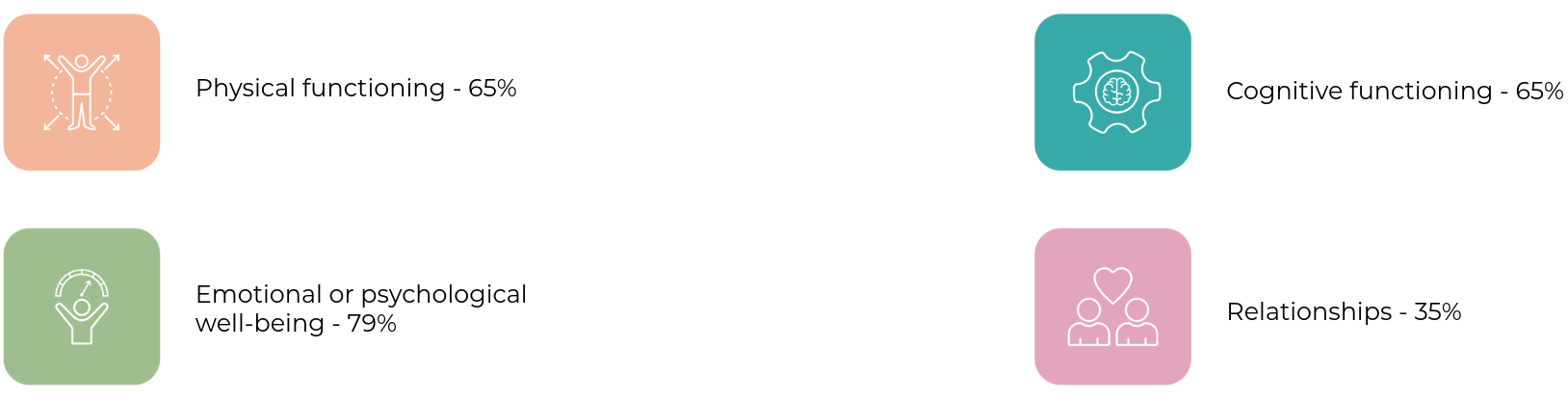
Life with mBC may bring changes to many aspects of your daily routine impacting your overall quality of life. A recent ABC Global Alliance 2024 patient survey revealed that 62% of the 1,254 respondents, all with advanced breast cancer, reported the disease having a negative impact on their overall wellbeing, including the following areas: 2
By paying close attention to your quality of life, you, your loved ones, and your care team can work together to define what ‘doing well’ truly means for you, allowing for support that not only focus on length of life but also helps you nurture and strengthen the quality of the life you live day to day.3
The Spectrum of Quality of Life
Quality of life is deeply personal to you, and for women with mBC, it's about more than physical symptoms and not just about how your body feels; it's also about your emotions, your relationships, and what you love to do. By focusing on all aspects of wellbeing, such as mental health, nutrition, physical activity, intimacy, rest, and social connection, you can discover ways to improve your day-to-day life.1
This involves:
- Openly discussing your mental wellbeing and intimacy with people you trust including your care team.
- Acknowledging and validating the very real challenges you face, such as fatigue and social isolation.
- Embracing personalised approaches to nourish your body, stay active, and ensure you get adequate rest.

Living with mBC can impact your emotional wellbeing in various ways, affecting your mood, self-esteem, increasing anxiety, or even shifting your sense of connection with others.4 Looking after your mental health can be an important part of living well with mBC, and small steps, such as sharing how you feel, seeking support, or practicing mindfulness, may help create space for coping and connection.

With mBC, your appetite, energy levels, and physical strength might fluctuate, making it challenging to always eat well. Ensuring you are taking on the nutrients you need, including carbohydrates, protein, and fats, along with vitamins, minerals, and fluids, is important to support your body.5

Living with mBC can affect your strength and mobility, which may change how easily you are able to manage daily activities. Gentle movement, adapted to your capabilities, can help support your physical function and wellbeing.6 It is not about performance, but about finding safe and achievable ways to move that feel manageable over time.

mBC can bring both emotional and physical changes, that might influence your body image, self-confidence, and intimate relationships. Having open conversations and exploring ways you can adapt to maintain closeness can help to rebuild confidence and strengthen your connection.7 Learn more about how to safeguard intimacy while living with mBC.

The demands of living with mBC may bring feelings of tiredness and depletion. Prioritising self-care, stress reduction, and healthy boundaries are crucial to preserve your energy and wellbeing.8

Maintaining connections, feeling a sense of belonging, and sharing moments with others can sometimes feel more challenging after a diagnosis.9 Thinking about how you can adapt social plans to what you’re comfortable with may help you to maintain and re-establish meaningful connections with your loved ones and community.
Patient Stories
Find inspiration in the experiences of other people living with breast cancer. While Everyone’s journey is different, these stories all share messages of strength, resilience, and inspiration.


References
- WHOQOL - Measuring Quality of Life| The World Health Organization. Available at: https://www.who.int/tools/whoqol [Accessed April 2026].
- ABC Global Alliance. (2025). Advanced Breast Cancer Global Decade Report 2.0 2015–2025 Knowledge in Motion A Decade Reviewed, a Decade Defined (pp. 1–168). ABC. Available at: ABC Global Charter & Report | ABC Global Alliance [Accessed April 2026].
- Clarijs ME et al. Measuring Quality of Life Using Patient-Reported Outcomes in Real-World Metastatic Breast Cancer Patients: The Need for a Standardized Approach. Cancers (Basel). 2021 May 12;13(10):2308. doi: 10.3390/cancers13102308.
- Mosher CE et al. Living with metastatic breast cancer: a qualitative analysis of physical, psychological, and social sequelae. Breast J. 2013 May-Jun;19(3):285-92. doi: 10.1111/tbj.12107.
- Conigliaro T et al. Food Intake During Cancer Therapy: A Systematic Review. Am J Clin Oncol. 2020 Nov;43(11):813-819. doi: 10.1097/COC.0000000000000749.
- Hiensch AE et al. Supervised, structured and individualized exercise in metastatic breast cancer: a randomized controlled trial. Nat Med. 2024 Oct;30(10):2957-2966. doi: 10.1038/s41591-024-03143-y.
- Reese JB et al. (2022) Coping With Changes to Sex and Intimacy After a Diagnosis of Metastatic Breast Cancer: Results From a Qualitative Investigation With Patients and Partners. Front. Psychol. 13:864893. doi: 10.3389/fpsyg.2022.864893 .
- Zimmaro LA et al. Greater mindfulness associated with lower pain, fatigue, and psychological distress in women with metastatic breast cancer. Psychooncology. 2020 Feb;29(2):263-270. doi: 10.1002/pon.5223.
- Lewis S et al. (2023). The incurable self: Negotiating social bonds and dis/connection with metastatic breast cancer. Sociology of Health & Illness, 46(2), 295–314. https://doi.org/10.1111/1467-9566.13704.